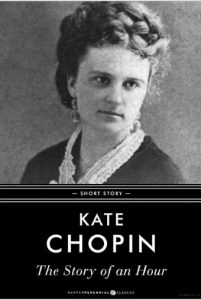
Story, # short story, story,
“The Story of an Hour” is a short story written by Kate Chopin. It was first published in a magazine called Vogue on December 6, 1894.
The story is about a woman named Louise Mallard whose husband, Brently Mallard, was thought to be dead. However, she later finds out that he is actually alive. The title of the story refers to the short period of time that Louise feels free after thinking her husband had died.
Even though this story was written a long time ago in 1894, it was considered controversial for its time because it features a woman who is happy about her husband’s death. The story was written in English and is a short story.
Plot
Louise Mallard has a heart condition and her sister Josephine has to carefully tell her that her husband Brently has died in a train accident.
Louise goes to her room to be alone and starts to think about how she’ll never be oppressed by her husband again and will be free to live her life as she pleases.
She becomes overjoyed with this newfound sense of freedom. Josephine comes to her door and begs her to come out, but Louise wants to stay and imagine all the happy days ahead of her.
Just as she finally opens the door, Brently walks in and Josephine screams.
Richards tries to block Louise from seeing Brently but she still sees him and has a heart attack from seeing him.
The doctors arrive and say she died from the shock.
Characters
Louise Mallard
She’s a lady who’s married to a man named Brently. Everyone thinks that he died in a train crash, but when Louise hears about it, she’s secretly happy because she now has the chance to live life on her own.
Even though she loved her husband, she loves the idea of being independent more. She gets really upset when she finds out that her husband is actually alive and comes back home.
Brently Mallard
He’s Louise’s husband. Although Louise thinks he was a kind and loving man, being married to him also meant that she couldn’t live her life the way she wanted to. Brently doesn’t know that people thought he died in a train crash.
Josephine
She’s Louise’s sister. She’s the one who told Louise about Brently’s death.
Richards
He’s Brently’s friend. Richards found out about the train crash and Brently’s death at a newspaper office. He was there when Josephine told Louise the news.
Summary
Because Mrs. Mallard had a heart problem, people were very careful when they told her about her husband passing away. They wanted to make sure they did it in a way that wouldn’t upset her too much.
Josephine, Mrs. Mallard’s sister, told her about the death of her husband Brently Mallard in a kind manner with the assistance of a friend named Richards. Richards helped to confirm the news of Brently’s death, which was caused by an accident.
Mrs. Mallard cried uncontrollably when she first heard the news of her husband’s death, but then she went to her room alone and didn’t want anyone to follow her.
She sat in an armchair facing an open window, feeling very tired both physically and mentally.
Mrs. Mallard looked out of the window and saw trees full of new spring life, felt the fresh smell of rain in the air, heard a street vendor, a distant song, and birds chirping. There were also some clear blue skies visible in the clouds in the western direction.
She sat still in the chair with her head back, only moving when she cried, just like a child who sobs in their sleep after crying themselves to sleep.
Mrs. Mallard was young with a calm and controlled face that showed her strength, but at that moment her eyes were blank and staring at a patch of blue sky. She was not thinking deeply, but rather her thoughts were suspended.
She was waiting for something unknown and frightening that was coming towards her, she could sense it through the sounds, smells, and colors in the air, but she couldn’t identify what it was.
Mrs. Mallard’s breathing was fast and she was trying to resist an unknown force, but couldn’t. She whispered “free” and her eyes cleared from fear and became bright. Her heart was racing and she felt relaxed and warm throughout her body. She had a strong, clear understanding without questioning if it was good or bad.
Mrs. Mallard anticipates tears upon seeing her husband’s lifeless hands, but also sees a future ahead that is exclusively hers and she is ready to embrace it. She recognizes the wrong in others making decisions for her, even with good intentions, and chooses to live for herself in the coming years.
Mrs. Mallard had a complicated relationship with her husband, but it was irrelevant as she realized that being in control of her own life and asserting herself was her strongest desire.
“Free! Body and soul free!” she kept whispering.
Josephine was begging at the closed door for entry, pleading with Louise to open it. She was worried about Louise’s health and begged for her to open the door and stop whatever she was doing.
Louise told Josephine to leave her alone and denied that she was making herself ill. She was imagining the future days that would belong to her and was filled with excitement. She had a change of heart from the previous day and now hoped for a long life.
Mrs. Mallard opens the door to her sister after being inside and has a triumphant expression. She hugs her sister and they descend the stairs, where Richards was waiting for them.
Brently Mallard entered the house with a latchkey and was surprised by Josephine’s scream and Richards’ quick action to hide his wife from view. Brently Mallard had just returned from a trip and was unaware of the accident.
But Richards was too late.
When the doctors came they said she had died of heart disease – of the joy that kills.
Louise Mallard
Louise is considered an intelligent and independent woman who understands what is expected of her in society, but her thoughts and feelings are quite different. When her sister Josephine informs her of her husband Brently’s death, Louise experiences a range of emotions instead of feeling numb like many other women would in her situation. Louise is shown to be an emotional and expressive woman, who knows that she should grieve for Brently, but instead feels elated at the thought of her newfound independence.
In her private moments, Louise thinks about her future and the opportunities that await her, which she sees as brighter now that she is free from the constraints of marriage. The label given to her heart problem, “heart trouble,” suggests that it is both a physical and emotional problem, indicating the extent to which marriage has oppressed her.
During the hour in which she believes Brently to be dead, Louise feels a new sense of independence and her heart beats strongly. She is alone in her room, with her heart racing and her body feeling warm. She spreads her arms open, symbolically welcoming her new life and repeats “body and soul free” to herself, showing how total this newfound independence is for her.
However, her joy is short-lived when Brently arrives home alive, and her heart trouble reappears, killing her. The irony is that Louise does not die of joy, as the doctors claim, but actually from the loss of joy.
Brently’s death gave her a glimpse of a new life, and when that new life is taken away from her so suddenly, the shock and disappointment are too much for her to bear. This story is a poignant reminder of the emotional turmoil that women faced during that time, and the impact that society and expectations had on their lives.
Full Story: The Story of an Hour
Knowing that Mrs. Mallard was afflicted with a heart trouble, great care was taken to break to her as gently as possible the news of her husband’s death.
It was her sister Josephine who told her, in broken sentences; veiled hints that revealed in half concealing. Her husband’s friend Richards was there, too, near her. It was he who had been in the newspaper office when intelligence of the railroad disaster was received, with Brently Mallard’s name leading the list of “killed.” He had only taken the time to assure himself of its truth by a second telegram, and had hastened to forestall any less careful, less tender friend in bearing the sad message.
She did not hear the story as many women have heard the same, with a paralyzed inability to accept its significance. She wept at once, with sudden, wild abandonment, in her sister’s arms. When the storm of grief had spent itself she went away to her room alone. She would have no one follow her.
There stood, facing the open window, a comfortable, roomy armchair. Into this she sank, pressed down by a physical exhaustion that haunted her body and seemed to reach into her soul.
She could see in the open square before her house the tops of trees that were all aquiver with the new spring life. The delicious breath of rain was in the air. In the street below a peddler was crying his wares. The notes of a distant song which some one was singing reached her faintly, and countless sparrows were twittering in the eaves. There were patches of blue sky showing here and there through the clouds that had met and piled one above the other in the west facing her window.
She sat with her head thrown back upon the cushion of the chair, quite motionless, except when a sob came up into her throat and shook her, as a child who has cried itself to sleep continues to sob in its dreams.
She was young, with a fair, calm face, whose lines bespoke repression and even a certain strength. But now there was a dull stare in her eyes, whose gaze was fixed away off yonder on one of those patches of blue sky. It was not a glance of reflection, but rather indicated a suspension of intelligent thought.
There was something coming to her and she was waiting for it, fearfully. What was it? She did not know; it was too subtle and elusive to name. But she felt it, creeping out of the sky, reaching toward her through the sounds, the scents, the color that filled the air.
Now her bosom rose and fell tumultuously. She was beginning to recognize this thing that was approaching to possess her, and she was striving to beat it back with her will — as powerless as her two white slender hands would have been. When she abandoned herself a little whispered word escaped her slightly parted lips. She said it over and over under her breath: “free, free, free!” The vacant stare and the look of terror that had followed it went from her eyes. They stayed keen and bright. Her pulses beat fast, and the coursing blood warmed and relaxed every inch of her body. She did not stop to ask if it were or were not a monstrous joy that held her. A clear and exalted perception enabled her to dismiss the suggestion as trivial.
She knew that she would weep again when she saw the kind, tender hands folded in death; the face that had never looked save with love upon her, fixed and gray and dead. But she saw beyond that bitter moment a long procession of years to come that would belong to her absolutely. And she opened and spread her arms out to them in welcome. There would be no one to live for her during those coming years; she would live for herself. There would be no powerful will bending hers in that blind persistence with which men and women believe they have a right to impose a private will upon a fellow-creature. A kind intention or a cruel intention made the act seem no less a crime as she looked upon it in that brief moment of illumination.
And yet she had loved him — sometimes. Often she had not. What did it matter! What could love, the unsolved mystery, count for in face of this possession of self-assertion which she suddenly recognized as the strongest impulse of her being!
“Free! Body and soul free!” she kept whispering.
Josephine was kneeling before the closed door with her lips to the keyhole, imploring for admission. “Louise, open the door! I beg, open the door — you will make yourself ill. What are you doing, Louise? For heaven’s sake open the door.”
“Go away. I am not making myself ill.” No; she was drinking in a very elixir of life through that open window. Her fancy was running riot along those days ahead of her. Spring days, and summer days, and all sorts of days that would be her own. She breathed a quick prayer that life might be long. It was only yesterday she had thought with a shudder that life might be long.
She arose at length and opened the door to her sister’s importunities. There was a feverish triumph in her eyes, and she carried herself unwittingly like a goddess of Victory. She clasped her sister’s waist, and together they descended the stairs. Richards stood waiting for them at the bottom.
Someone was opening the front door with a latchkey. It was Brently Mallard who entered, a little travel-stained, composedly carrying his grip-sack and umbrella. He had been far from the scene of the accident, and did not even know there had been one. He stood amazed at Josephine’s piercing cry; at Richards’ quick motion to screen him from the view of his wife.
But Richards was too late.
When the doctors came they said she had died of heart disease — of the joy that kills.